
Hiatus Hernia & Fundoplication Surgery
What is a Hiatus Hernia?
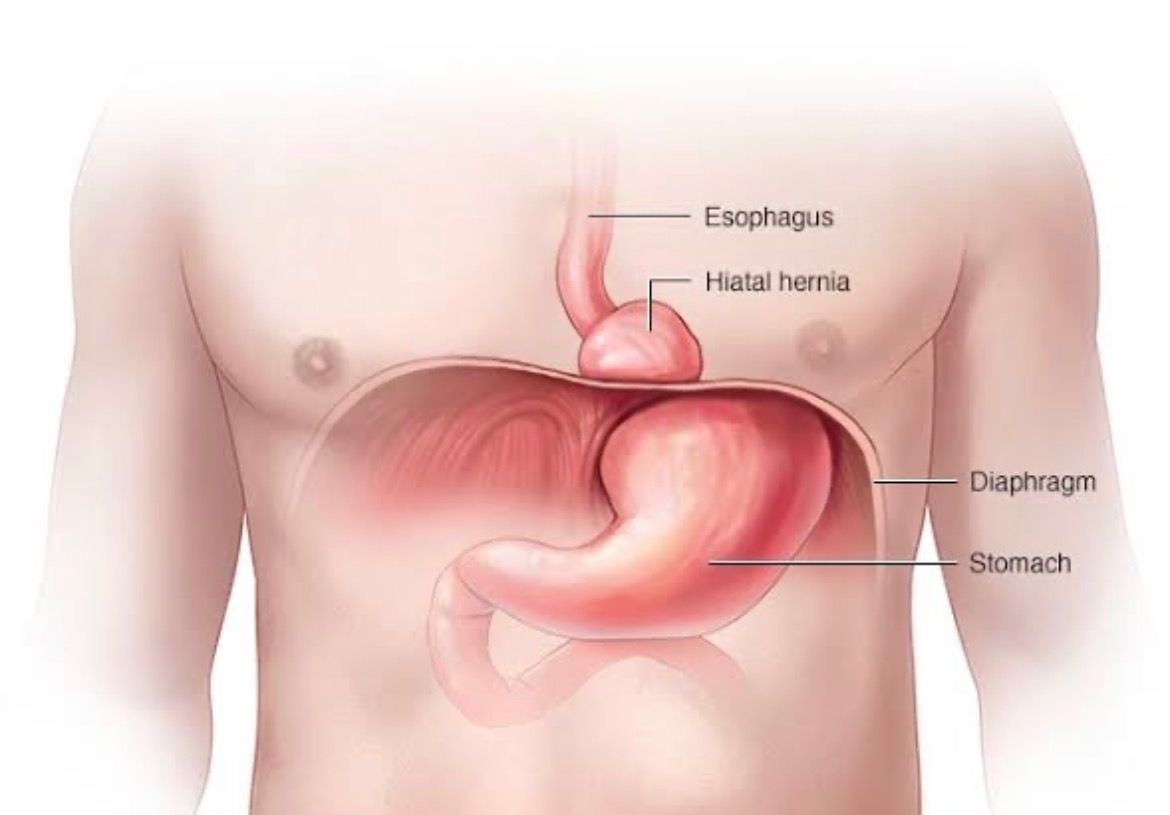
A hiatus hernia occurs when a portion of the stomach squeezes, slides or protrudes through the gap in the diaphragm through which the esophagus passes.
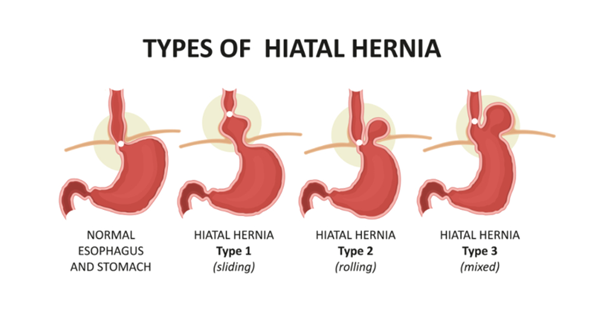
There are 4 main types of Hiatal Hernia:
Type 1 - Sliding Hiatus Hernia
This is the most common type of hiatus hernia.
It occurs when the junction between the oesophagus and the upper part of the stomach moves up through the oesophageal opening in the diaphragm into the chest cavity. The herniated portion of the stomach can slide back and forth, into and out of the chest.
Type 2 - Rolling Hiatus Hernia
This is sometimes called a para-oesophageal hernia. In this case, part of the stomach bulges into the chest through the weakest part of the diaphragm, which is the oesophageal opening.
The junction of the oesophagus and stomach stays down within the abdomen, and the top part of the stomach (the fundus) bulges up into the chest cavity.
This type of a hernia normally remains in one place, sitting next to the oesophagus, and does not move in or out when you swallow.
Type 3 - Combined Sliding and Rolling Hiatus Hernia
Type 4 - Combined Sliding and Rolling Hiatus Hernia where another abdominal organ passes through the diaphragm
Symptoms of Hiatus Hernia
Most people are not troubled by their hiatus hernia, but if reflux of the acid contents of the stomach occurs (called gastro-oesophageal reflux), you may experience heartburn. This is a painful burning sensation in the chest, throat or mouth.
Sudden regurgitation of acid fluid into the mouth can occur, especially when you lie down or bend forward. These symptoms are a problem when you go to bed and can wake you up.
Other less common symptoms of Hiatus Hernia include:
- Trouble swallowing
- Nausea
- Dry cough or wheezing
- Regurgitation of food
- Hoarseness or change in voice
- Chest pain or even shortness of breath
Treatments of Hiatus Hernia
Hiatus Hernia may be treated using Non-Surgical and Surgical options to relieve symptoms. Although no-surgical treatments may relieve the symptoms, these treatments do not fix the hiatal hernia. Surgical treatment is recommended to treat symptoms long term.
Non-Surgical treatments recommended to control and relieve symptoms are:
- Avoid foods and substances that increase reflux of acid into the oesophagus- nicotine (cigarettes), caffeine, chocolate, fatty foods, alcohol, spicy food, tomato based sauces, breads
- Eat smaller, more frequent meals
and do not eat within 2-3 hours of bedtime.
- Avoid bending, stooping, abdominal exercises, tight belts, and girdles all of which increase abdominal pressure and cause reflux.
- Obesity also increases abdominal pressure. If overweight,
it is recommended to lose weight
to reduce symptoms.
- Prescription medications
that reduce acid secretion in the stomach
- Elevate the head of the bed 8 to 10 inches by putting pillows or a wedge under the upper part of the mattress. Gravity then helps keep stomach acid out of the esophagus while sleeping.
Surgical Treatments are usually recommended for those patients with symptoms such as:
- Persistent heartburn
- Difficulty in swallowing that cannot be controlled with medications
- Patients who have tried to manage symptoms conservatively with little or no reduction in symptoms
- Those who do not wish to be on medications long term
- An
obstructed or strangulated Hiatus Hernia requires surgery on an emergency basis
Hiatus Hernia & Fundoplication Surgery
If conservative non-surgical treatments fail to resolve your GORD, we may recommend a surgical procedure called Hiatus Hernia repair + Fundoplication.
Hiatus Hernia repair + Fundoplication surgery reinforces the lower oesophageal sphincter’s ability to close and helps to prevent gastro-oesophageal reflux from occurring.
This surgery can be performed laparoscopically and involves five small cuts in the abdomen, using the operating telescope (laparoscope) to return the stomach to the abdomen and reduce the size of the defect in the diaphragm. The top part of the stomach is then folded over the lower part of the oesophagus to reinforce the lower oesophageal sphincter (Fundoplication).
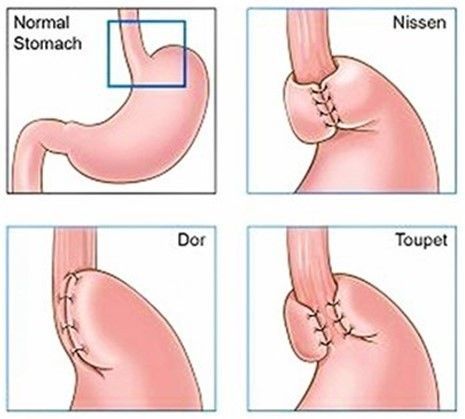
Different Types of Fundoplication
Hiatus Hernia & Fundoplication Post-Operative Instructions
Hiatus hernia repair + Fundoplication is performed under general anaesthesia and most patients spend a couple of nights in the hospital. Most patients will be able to go home two days after the operation once you are comfortable and able to take a liquid diet.
After Hiatus Hernia & Fundoplication surgery:
- Your wounds are covered with waterproof dressings so you can shower. They should be removed after 7 days.
- Dr Hatzifotis will provide you with advice regarding your wound.
- Our team may give you prescription pain medicine.
- Dr Hatzifotis will instruct you about your diet and activity restrictions for the first 6 weeks after surgery.
When you first go home, it is advised:
- Not to drive for at least 5 - 7 days.
- Not to partake in heavy lifting (>5kg) or strenuous exercise for 6 weeks.
- You can remove your dressings after 1 week.
- You can gradually resume your daily activities. You are encouraged to start walking as early as possible to reduce the risks of blood clots and pneumonia.
- You should be able to return to work after 1 - 2 weeks.
Dr Hatzifotis will review patients in his rooms 3 weeks after the operation for a post-operative consultation, or sooner should any concerns arise.
Possible Side Effects of Laparoscopic Hiatus Hernia Repair
Hiatus Hernia Surgery is found to be beneficial in over 95% of patients, however, with very few possible side effects.
Possible rare side effects following surgery include:
- Bloating and passing more wind