
Mini Gastric Bypass
The Mini Gastric Bypass Surgery (MGBP) is also referred to as Single Anastomosis Gastric Bypass (SAGB) surgery.
The Mini Gastric Bypass is a relatively new procedure, which combines some of the properties of a Gastric Sleeve with a Gastric Bypass.
The Mini Gastric Bypass procedure is performed with a Laparoscopic (keyhole) technique under general anaesthesia.
The upper part of the stomach is divided into a tube, similar to the top three-quarters of a sleeve and then joined to a loop of intestine.
Five small incisions (between 5 and 12mm in length) are made for the insertion of keyhole surgery instruments.
Using these instruments, the top of the stomach is stapled to form a thin tube (30ml to 50ml in size). The thin tube becomes the new, smaller stomach and is completely separate to the rest of the stomach.
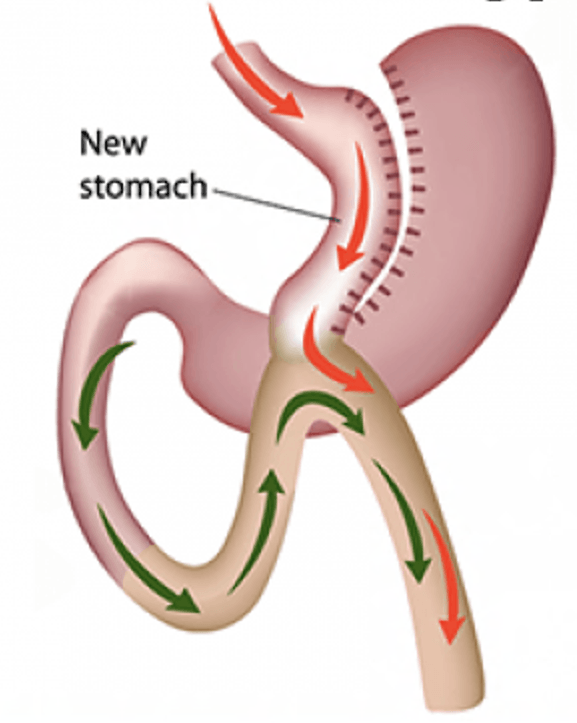
This stomach is then sewn to a loop of the small intestine, bypassing the first part of the intestine called the duodenum and approximately 150-200cm of the bowel. The rest of the stomach and upper part of the small intestine remains in the body but is no longer used for food digestion.
It is an operation that combines restriction with some malabsorption, and the result is that it provides good weight loss with great quality of life.
How does the Mini Gastric Bypass work?
1.
Restricting the amount of food that can be eaten at any one time, thereby reducing meals to healthy portion size
2.
Decreasing the number of calories your body absorbs during digestion as food bypasses about 200cm of your upper small intestine
Who is a Candidate for the Mini Gastric Bypass?
You may be eligible for a Mini Gastric Bypass if you have a Body Mass Index (BMI) that is greater than 30 and you have tried all other non-surgical methods of weight loss without long-term success.
What are the Advantages of the Mini Gastric Bypass?
- Most people can expect to lose up 70 - 80% of their excess body weight over a 12 - 18 month period
- It is particularly effective for patients with a larger BMI as the procedure has more predictable weight loss outcomes.
- Most patients have an almost immediate reduction in their need for diabetic medication and some are able to completely stop diabetic medication altogether.
- It does not require any on-going adjustments which are required with other procedures, such as the gastric band. Regular follow up is however necessary to ensure weight loss is appropriate and intake is nutritionally adequate.
- It is effective for those people who tend towards high sugar or high-fat foods. Dumping syndrome is directly linked to a high-sugar, or high-fat intake. Symptoms of dumping are unpleasant and therefore discourage the intake of high-calorie sweet foods.
What are the Disadvantages of the Mini Gastric Bypass?
- Complications, although rare, are generally more serious than with other weight loss procedures, such as the gastric band.
- There is a higher risk of nutritional deficiency due to the reduced absorption of vitamins and nutrients. Life-long vitamin and mineral supplementation is essential to prevent deficiency following surgery.
- Long term follow-ups with the surgeon and dietitian to monitor nutritional status is also very important.
What are the Risks of the Mini Gastric Bypass?
Bleeding
This occurs in less than 1 in 100 patients after the procedure. This may require blood transfusion or rarely re-operation.
Infections
Infections in abdomen, chest or wounds may develop. An infection may require treatment with antibiotics and can occasionally require re-operation.
Leak
A leak of fluid can occur through the new join between the stomach and intestines if it does not heal well. This can happen in the first few days after surgery and may require reoperation.
< 1% patients
Damage to Organs
Any Laparoscopic or keyhole procedure can be complicated by unintentional injury to the organs near the area of operation. This may require a repeat operation to repair the damaged organs.
1 in 1,000 patients
Blood Clots
Deep Venous Thromboses (clots in the veins) and pulmonary embolus (clots in the lungs)
< 1% patients
What are the possible Long Term Complications of the Mini Gastric Bypass?
Ulcers
Just like ulcers can occur in a normal stomach, they can also occur in the new stomach pouch after a Mini Gastric Bypass.
Approx 5 %
Anastomotic Stricture
Sometimes the connection between the stomach and the intestines is too tight (1% patients).
Internal Hernia
Occasionally the loops of bowel in the abdomen can become entangled and get stuck.
<1% patients
Bile Reflux
Bile reflux occurs post-operatively in approx 1-5% patients and some of these patients may require re-operation with conversion to Roux-En-Y Gastric Bypass.
Weight Re-gain or Failure of Weight Loss
This usually occurs when dietary advice is not followed. If you eat too much food at once, this can stretch the small stomach pouch.
Dumping Syndrome -
Dumping is the result of high sugar or high-fat foods passing too quickly into the small intestine. Symptoms can include cramping, nausea, dizziness, weakness and fatigue.